
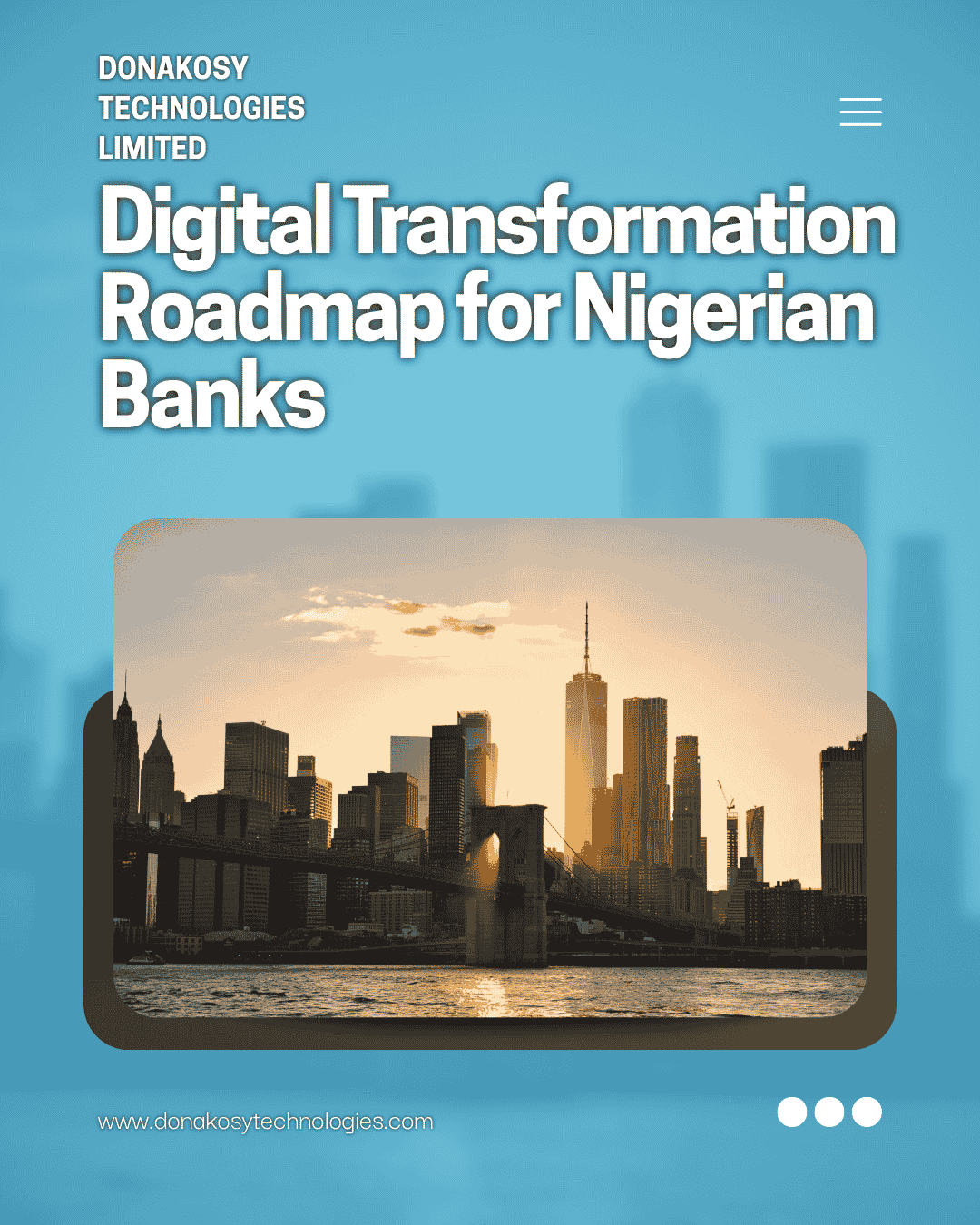
Digital Transformation Roadmap for Nigerian Banks: A Complete Guide to Building the Future of Banking in Nigeria
Introduction: Why Digital Transformation Has Become Critical for Nigerian Banks
The Nigerian banking industry is undergoing one of the most significant transformations in its history. Driven by rapid technological advancement, changing customer expectations, increased competition from fintech companies, regulatory pressure, and the growing demand for seamless digital financial services, banks in Nigeria can no longer rely solely on traditional banking models.
Digital transformation has moved beyond simply introducing mobile banking applications or upgrading banking platforms. For Nigerian banks, it represents a complete rethinking of how financial services are designed, delivered, managed, and improved. It involves the integration of emerging technologies, customer-centric strategies, operational improvements, data-driven decision-making, cybersecurity enhancement, and organizational change.
The question many banking executives, financial institutions, and technology leaders are asking is no longer “Should Nigerian banks embrace digital transformation?” but rather:
“How can Nigerian banks successfully build and execute a digital transformation roadmap that creates sustainable growth?”
A well-structured digital transformation roadmap provides a strategic framework that helps banks transition from traditional financial institutions into agile, technology-driven organizations capable of competing in a rapidly evolving financial ecosystem.
Nigeria’s banking sector has already witnessed significant digital adoption. Customers now expect instant transfers, digital account opening, mobile payments, personalized financial recommendations, automated customer support, and secure online banking experiences. At the same time, fintech startups have disrupted traditional banking by offering innovative solutions focused on convenience, accessibility, and speed.
To remain competitive, Nigerian banks must develop digital transformation strategies that address not only technology implementation but also business processes, workforce capabilities, customer experiences, risk management, and long-term innovation.
This comprehensive guide explores the digital transformation roadmap for Nigerian banks, covering the key stages, technologies, challenges, benefits, and best practices required to successfully navigate the digital future of banking.
Understanding Digital Transformation in Nigerian Banking
What Is Digital Transformation in Banking?
Digital transformation in banking refers to the strategic adoption of digital technologies to improve banking operations, enhance customer experiences, increase efficiency, reduce costs, and create new financial products and services.
Unlike basic digitization, which involves converting physical processes into digital formats, digital transformation involves redesigning the entire banking ecosystem.
For example:
- Digitization involves converting paper bank statements into electronic statements.
- Digitalization involves allowing customers to access statements through online banking.
- Digital transformation involves using customer data, artificial intelligence, automation, and analytics to provide personalized financial experiences across multiple channels.
For Nigerian banks, digital transformation means creating a connected banking environment where customers can access financial services anytime, anywhere, through secure and convenient digital platforms.
The Current State of Digital Banking Transformation in Nigeria
Nigeria has become one of Africa’s leading financial technology markets. The rapid growth of fintech companies, increased smartphone adoption, expanding internet access, and government initiatives supporting financial inclusion have accelerated digital banking adoption.
Traditional banks such as commercial banks, microfinance institutions, and emerging digital banks are investing heavily in technology infrastructure to meet changing market expectations.
Visit https://www.donakosytechnologies.com for more details and trusted support.
Several key trends are shaping digital transformation in Nigerian banking:
- Growth of Mobile Banking
Mobile banking has become one of the biggest drivers of financial service accessibility in Nigeria.
Millions of Nigerians now perform banking activities through mobile applications, including:
- Money transfers
- Bill payments
- Account management
- Loan applications
- Investment services
- Card management
- Customer support
Mobile-first banking has become particularly important because many Nigerians access the internet primarily through smartphones rather than desktop computers.
Banks that provide fast, reliable, and user-friendly mobile experiences are better positioned to attract and retain customers.
Visit https://www.donakosytechnologies.com for more details and trusted support.
- Rise of Fintech Competition
The emergence of Nigerian fintech companies has transformed the financial services landscape.
Fintech organizations have introduced innovative solutions around:
- Digital payments
- Lending platforms
- Wealth management
- Digital wallets
- Payment infrastructure
- Financial inclusion
These companies have challenged traditional banks by offering simpler onboarding processes, faster transactions, and improved user experiences.
As a result, Nigerian banks are increasingly partnering with fintech companies or developing their own innovation ecosystems to remain competitive.
- Increasing Demand for Customer-Centric Banking
Modern banking customers expect experiences similar to what they receive from leading digital platforms.
Customers want:
- Instant service delivery
- Personalized recommendations
- Minimal paperwork
- Quick problem resolution
- 24/7 accessibility
- Transparent financial information
Banks that fail to meet these expectations risk losing customers to more agile competitors.
Digital transformation allows banks to move from product-focused banking to customer-focused banking.
Visit https://www.donakosytechnologies.com for more details and trusted support.
Why Nigerian Banks Need a Digital Transformation Roadmap
A digital transformation roadmap provides direction, priorities, timelines, and measurable objectives for technology-driven business transformation.
Without a roadmap, digital transformation projects often become disconnected technology investments that fail to deliver meaningful business value.
A strategic roadmap helps Nigerian banks answer important questions:
- Which digital technologies should be prioritized?
- How should investments be allocated?
- What customer problems should technology solve?
- How can digital initiatives support business growth?
- What organizational changes are required?
- How can cybersecurity risks be managed?
A successful roadmap ensures that technology investments align with business objectives.
Visit https://www.donakosytechnologies.com for more details and trusted support.
Key Objectives of a Digital Transformation Roadmap for Nigerian Banks
- Improving Customer Experience
Customer experience is one of the primary drivers of digital transformation.
Nigerian banks must create seamless experiences across:
- Mobile applications
- Websites
- ATMs
- Branches
- Customer service channels
- Digital payment platforms
The goal is to provide customers with consistent and convenient interactions regardless of the channel they use.
Examples include:
- Digital account opening within minutes
- AI-powered customer assistance
- Personalized financial recommendations
- Instant transaction notifications
- Self-service banking solutions
- Increasing Operational Efficiency
Traditional banking operations often involve manual processes, paperwork, and complex workflows.
Digital transformation enables banks to automate repetitive activities and improve productivity.
Examples include:
- Automated loan processing
- Digital document verification
- Robotic process automation
- Automated compliance monitoring
- Cloud-based operational systems
Improved efficiency allows banks to reduce operational costs while delivering faster services.
Visit https://www.donakosytechnologies.com for more details and trusted support.
- Enhancing Financial Inclusion
Financial inclusion remains a major opportunity in Nigeria.
Digital transformation enables banks to reach underserved populations through:
- Mobile banking platforms
- Agent banking networks
- Digital wallets
- Low-cost financial products
- Remote identity verification
By leveraging technology, banks can expand financial access beyond traditional branch locations.
- Strengthening Risk Management and Security
As banking becomes increasingly digital, cybersecurity becomes a critical priority.
Nigerian banks must invest in:
- Advanced fraud detection systems
- Artificial intelligence security monitoring
- Data encryption
- Identity verification technologies
- Cybersecurity awareness programs
A successful digital transformation strategy must balance innovation with strong risk management.

Visit https://www.donakosytechnologies.com for more details and trusted support.
The Digital Transformation Roadmap Framework for Nigerian Banks
A successful digital transformation journey requires a structured approach. The following roadmap outlines the major stages Nigerian banks should consider.
Phase One: Digital Transformation Assessment and Strategy Development
Before implementing new technologies, banks must evaluate their current digital maturity.
This involves assessing:
- Existing technology infrastructure
- Customer experience capabilities
- Workforce skills
- Data management practices
- Cybersecurity readiness
- Digital product performance
- Operational processes
A digital maturity assessment helps identify gaps and opportunities.
Key Questions Banks Should Ask
Technology Assessment
- Are existing banking platforms scalable?
- Can systems integrate with modern digital solutions?
- Is the infrastructure prepared for cloud adoption?
- Are legacy systems limiting innovation?
Customer Experience Assessment
Visit https://www.donakosytechnologies.com for more details and trusted support.
- How do customers currently interact with the bank?
- What digital challenges do customers experience?
- Which services need improvement?
Workforce Assessment
- Do employees have digital skills?
- Is there a culture that supports innovation?
- Are teams prepared for technology-driven changes?
Developing a Digital Transformation Vision
After assessing current capabilities, banks should define a clear digital transformation vision.
A strong vision should explain:
- What the bank wants to achieve digitally
- How technology will improve customer value
- Which areas require transformation
- How success will be measured
For example:
“A Nigerian bank may aim to become Africa’s most customer-focused digital financial institution by leveraging artificial intelligence, cloud technology, data analytics, and open banking solutions.”
A clear vision ensures alignment between executives, employees, technology teams, and stakeholders.

Visit https://www.donakosytechnologies.com for more details and trusted support.
Phase Two: Modernizing Banking Infrastructure
One of the biggest challenges facing traditional banks is dependence on outdated legacy systems.
Many banking platforms were built decades ago and were not designed for today’s digital environment.
Modern digital transformation requires banks to upgrade their technology foundations.
Key infrastructure priorities include:
Cloud Computing Adoption
Cloud technology enables banks to improve:
- Scalability
- Speed of innovation
- Data management
- System reliability
- Cost efficiency
Cloud-based banking infrastructure allows financial institutions to launch digital services faster and respond more effectively to market changes.
However, Nigerian banks must carefully address:
- Regulatory requirements
- Data protection
- Security controls
- Cloud governance
Application Programming Interfaces (APIs)
APIs allow different systems and platforms to communicate with each other.
Visit https://www.donakosytechnologies.com for more details and trusted support.
For Nigerian banks, APIs enable:
- Fintech partnerships
- Third-party financial services
- Open banking solutions
- Faster product development
APIs create opportunities for banks to become part of broader digital financial ecosystems.
Core Banking System Transformation
The core banking system is the foundation of banking operations.
Modernizing core banking platforms helps banks achieve:
- Faster transaction processing
- Improved customer experiences
- Better integration capabilities
- Real-time financial services
Banks must carefully plan core system upgrades because they involve significant operational complexity.

Visit https://www.donakosytechnologies.com for more details and trusted support.
Phase Three: Building Digital Customer Experience Platforms
Customer experience is at the center of successful banking transformation.
Nigerian banks must design digital platforms that are simple, reliable, secure, and personalized.
Important areas include:
Mobile Banking Innovation
Mobile banking applications should evolve beyond basic transactions.
Future-focused banking apps should provide:
- Personalized dashboards
- Budgeting tools
- Savings recommendations
- Investment opportunities
- Digital lending options
- AI-powered assistance
Digital Account Opening
Customers increasingly expect quick onboarding experiences.
Digital account opening solutions should include:
- Online registration
- Electronic identity verification
- Biometric authentication
- Automated compliance checks
Reducing onboarding friction can significantly improve customer acquisition.
Visit https://www.donakosytechnologies.com for more details and trusted support.
Omnichannel Banking Experiences
Customers interact with banks through multiple channels.
An effective digital transformation strategy ensures these channels work together.
Customers should experience consistency across:
- Mobile apps
- Internet banking
- Branch services
- Contact centers
- Social media platforms
Phase Four: Leveraging Emerging Technologies for Banking Transformation
Technology innovation is at the heart of modern banking transformation. Nigerian banks that want to remain competitive must strategically adopt emerging technologies that improve efficiency, enhance customer experiences, strengthen security, and create new revenue opportunities.
However, technology adoption should not be driven by trends alone. Banks must evaluate each technology based on business value, customer impact, regulatory requirements, and long-term strategic objectives.
The following technologies are expected to play a major role in shaping the future of Nigerian banking.
Artificial Intelligence (AI) and Machine Learning in Nigerian Banking
Artificial intelligence is becoming one of the most important technologies in financial services globally.
For Nigerian banks, AI provides opportunities to automate processes, understand customer behavior, detect fraud, and deliver personalized financial experiences.
Visit https://www.donakosytechnologies.com for more details and trusted support.
How Nigerian Banks Can Use Artificial Intelligence
- AI-Powered Customer Service
Traditional customer support models often involve long waiting times and limited service availability.
AI-powered chatbots and virtual assistants can provide customers with instant responses to common banking questions.
Applications include:
- Account balance inquiries
- Transaction support
- Password recovery assistance
- Loan information
- Product recommendations
- Complaint management
AI customer service solutions allow banks to provide 24/7 support while reducing pressure on human support teams.
- Fraud Detection and Prevention
Fraud remains a major concern in the Nigerian financial sector.
As digital transactions increase, criminals are developing more sophisticated methods to exploit banking systems.
Machine learning algorithms can analyze millions of transactions in real time to identify suspicious activities.
AI fraud detection systems can detect:
Visit https://www.donakosytechnologies.com for more details and trusted support.
- Unusual transaction patterns
- Suspicious account behavior
- Identity fraud attempts
- Unauthorized access attempts
- Abnormal payment activities
This enables banks to respond faster and reduce financial losses.
- Credit Scoring and Digital Lending
One major opportunity for AI in Nigeria is improving access to credit.
Traditional credit assessment methods often exclude individuals and small businesses without formal banking histories.
AI-powered credit scoring can analyze alternative data sources such as:
- Transaction history
- Digital payment behavior
- Business activities
- Mobile financial records
This allows banks to provide more accurate lending decisions and expand access to financial services.
Data Analytics: Turning Banking Data into Business Intelligence
Banks generate enormous amounts of data every day.
This includes:
Visit https://www.donakosytechnologies.com for more details and trusted support.
- Customer transaction data
- Payment records
- Account activities
- Customer service interactions
- Digital banking behavior
However, data only creates value when banks can analyze and use it effectively.
Data analytics enables Nigerian banks to make smarter decisions based on customer insights.
Benefits of Data Analytics for Nigerian Banks
Personalized Banking Services
Customers increasingly expect financial products designed around their individual needs.
Through analytics, banks can understand:
- Spending habits
- Saving patterns
- Financial goals
- Product preferences
Banks can then provide personalized recommendations.
For example:
Visit https://www.donakosytechnologies.com for more details and trusted support.
A customer frequently receiving salary payments but maintaining low savings balances may receive targeted savings or investment recommendations.
Improved Customer Retention
Analytics helps banks identify customers who may be dissatisfied or likely to switch providers.
By analyzing customer behavior, banks can:
- Identify declining engagement
- Predict customer needs
- Improve service delivery
- Create targeted retention strategies
Better Business Decision-Making
Data-driven decision-making helps banks improve:
- Product development
- Marketing campaigns
- Risk management
- Operational planning
- Investment decisions
Blockchain Technology and Digital Trust
Although blockchain adoption in banking is still developing, the technology has potential applications in financial services.
Blockchain provides a decentralized and secure method for recording transactions.
Potential banking applications include:
Visit https://www.donakosytechnologies.com for more details and trusted support.
- Cross-border payments
- Digital identity verification
- Trade finance
- Smart contracts
- Fraud reduction
For Nigerian banks operating in an increasingly connected global financial environment, blockchain could improve transaction transparency and efficiency.
Robotic Process Automation (RPA)
Many banking processes involve repetitive administrative tasks.
Robotic Process Automation enables software robots to perform routine activities faster and with fewer errors.
Examples of banking processes suitable for automation include:
- Data entry
- Compliance reporting
- Customer onboarding
- Account verification
- Document processing
RPA allows employees to focus on higher-value activities requiring human judgment.
Open Banking and API-Based Financial Ecosystems
Open banking represents a major shift in how financial services are delivered.
Instead of operating as isolated institutions, banks increasingly need to participate in interconnected digital ecosystems.
Through APIs, banks can securely share financial information and services with authorized third-party providers.
Visit https://www.donakosytechnologies.com for more details and trusted support.
Opportunities Created by Open Banking in Nigeria
Open banking can support:
Fintech Partnerships
Banks can collaborate with fintech companies to develop:
- Digital payment solutions
- Lending platforms
- Investment services
- Financial management tools
Embedded Finance
Embedded finance allows banking services to be integrated into non-banking platforms.
Examples include:
- Retail platforms offering payment services
- Businesses providing digital wallets
- Apps offering financial products
New Revenue Streams
API-based ecosystems allow banks to generate revenue through:
Visit https://www.donakosytechnologies.com for more details and trusted support.
- Digital partnerships
- Banking-as-a-Service solutions
- Platform-based financial services
Phase Five: Digital Payments Transformation
Payments represent one of the biggest areas of digital transformation in Nigerian banking.
Nigeria has experienced rapid growth in electronic payments due to:
- Increased smartphone usage
- Fintech innovation
- Consumer demand for convenience
- Government efforts toward cashless transactions
Banks must continue improving payment infrastructure to support a digital economy.
Key Digital Payment Transformation Areas
Instant Payments
Customers expect transactions to happen immediately.
Visit https://www.donakosytechnologies.com for more details and trusted support.
Banks must provide:
- Fast transfers
- Reliable payment processing
- Real-time notifications
- Transaction transparency
Contactless Payments
Contactless payment technologies provide faster and more convenient payment experiences.
Examples include:
- NFC payments
- Digital wallets
- QR-code payments
Cross-Border Payment Innovation
Nigeria’s economy depends heavily on international transactions.
Digital transformation can improve:
- Remittance services
- Foreign currency payments
- International transfers
- Trade payments
Phase Six: Cybersecurity and Digital Risk Management
Digital transformation creates new opportunities but also introduces new cybersecurity risks.
As Nigerian banks expand digital services, they become attractive targets for cybercriminals.
A successful digital transformation roadmap must include cybersecurity as a foundation, not an afterthought.
Major Cybersecurity Challenges Facing Nigerian Banks
- Increasing Digital Fraud
Common threats include:
Visit https://www.donakosytechnologies.com for more details and trusted support.
- Phishing attacks
- Account takeover attempts
- Identity theft
- Social engineering scams
- Unauthorized transactions
Banks must continuously improve fraud prevention systems.
- Data Protection Requirements
Banks manage highly sensitive customer information.
Strong data protection measures are required to maintain customer trust.
Important security practices include:
- Encryption
- Access controls
- Data monitoring
- Secure authentication
- Privacy management
- Cybersecurity Awareness
Technology alone cannot eliminate cyber risks.
Employees and customers must understand cybersecurity best practices.
Banks should invest in:
Visit https://www.donakosytechnologies.com for more details and trusted support.
- Employee security training
- Customer awareness campaigns
- Regular security testing
- Incident response preparation
Building a Zero Trust Security Model
Modern banking security is moving toward a zero trust approach.
The principle behind zero trust is:
“Never trust automatically; always verify.”
This means every user, device, and transaction must be continuously authenticated and authorized.
Zero trust security includes:
- Multi-factor authentication
- Identity management
- Continuous monitoring
- Access restrictions
- Threat detection
Phase Seven: Developing Digital Skills and Creating a Culture of Innovation
Technology transformation is not only about systems and software.
People are one of the most important components of digital transformation success.
Many digital transformation projects fail because organizations focus heavily on technology while ignoring workforce readiness.
Building Digital Capabilities Among Bank Employees
Nigerian banks need employees who understand:
- Digital technologies
- Data analytics
- Cybersecurity principles
- Customer experience design
- Agile methods
- Innovation processes
Important Digital Skills for Banking Professionals
Data Literacy
Employees should understand how to interpret and use data for decision-making.
Visit https://www.donakosytechnologies.com for more details and trusted support.
Technology Awareness
Staff should understand emerging technologies and how they affect banking operations.
Digital Customer Experience Skills
Employees must understand modern customer expectations and digital service delivery.
Cybersecurity Awareness
Every employee should understand their role in protecting customer information.
Creating an Innovation Culture
Successful digital banks encourage experimentation and continuous improvement.
Banks should create environments where teams can:
Visit https://www.donakosytechnologies.com for more details and trusted support.
- Test new ideas
- Develop prototypes
- Learn from failures
- Collaborate across departments
Innovation should become part of the organizational culture rather than a temporary project.
Phase Eight: Partnering With Fintech Companies
Collaboration between traditional banks and fintech companies will be a major driver of Nigeria’s digital banking future.
Instead of viewing fintech companies only as competitors, banks can leverage partnerships to accelerate innovation.
Benefits of Bank-Fintech Partnerships
Faster Product Development
Fintech companies often specialize in developing innovative digital solutions quickly.
Banks can leverage these capabilities to launch new services faster.
Visit https://www.donakosytechnologies.com for more details and trusted support.
Improved Customer Experience
Partnerships can help banks provide:
- Better payment solutions
- Easier onboarding
- Digital lending platforms
- Financial management tools
Access to New Markets
Fintech partnerships can help banks reach:
- Unbanked populations
- Small businesses
- Young digital customer
Examples of Strategic Partnership Areas
Nigerian banks can collaborate with fintech companies in areas such as:
Visit https://www.donakosytechnologies.com for more details and trusted support.
- Payment technology
- Digital identity
- Lending platforms
- Blockchain solutions
- Artificial intelligence
- Wealth management technology
Measuring Digital Transformation Success in Nigerian Banks
A digital transformation roadmap requires measurable goals.
Banks must track performance indicators to determine whether transformation initiatives are delivering value.
Key Digital Transformation KPIs for Banks
Customer Experience Metrics
Banks should measure:
- Digital customer adoption
- Mobile application usage
- Customer satisfaction scores
- Digital onboarding completion rates
Operational Efficiency Metrics
Important measurements include:
- Processing time reduction
- Cost savings
- Automation levels
- Employee productivity improvements
Technology Performance Metrics
Banks should monitor:
- System availability
- Transaction success rates
- Application performance
- Security incidents
Business Growth Metrics
Digital transformation should contribute to:
Visit https://www.donakosytechnologies.com for more details and trusted support.
- Revenue growth
- New customer acquisition
- Product adoption
- Market share expansion
Challenges of Digital Transformation in Nigerian Banks
While digital transformation presents enormous opportunities for Nigerian banks, the journey is not without challenges. Financial institutions must overcome technological, operational, regulatory, and cultural barriers to successfully achieve digital maturity.
Understanding these challenges allows banks to develop realistic transformation strategies and avoid common mistakes that prevent digital initiatives from delivering expected results.
- Legacy Banking Systems and Outdated Infrastructure
One of the biggest obstacles facing traditional Nigerian banks is dependence on legacy technology systems.
Many banks still operate on older core banking platforms that were not designed for modern digital services.
These systems often create challenges such as:
Visit https://www.donakosytechnologies.com for more details and trusted support.
- Limited integration capabilities
- Slow product development
- High maintenance costs
- Poor scalability
- Difficulty supporting real-time services
Modern customers expect instant transactions, seamless digital experiences, and constant innovation. However, outdated infrastructure can prevent banks from responding quickly to these expectations.
How Nigerian Banks Can Address Legacy System Challenges
Banks should adopt a gradual modernization approach instead of attempting risky complete replacements.
Possible strategies include:
- Migrating selected systems to cloud environments
- Implementing API-based integration layers
- Modernizing customer-facing applications first
- Gradually replacing outdated components
- Adopting modular banking architectures
A phased modernization strategy reduces disruption while allowing banks to continue improving digital capabilities.
- High Cost of Digital Transformation Investments
Digital transformation requires significant financial investment.
Banks must allocate resources toward:
Visit https://www.donakosytechnologies.com for more details and trusted support.
- Technology infrastructure
- Cybersecurity solutions
- Software platforms
- Employee training
- Digital product development
- Data management systems
For smaller financial institutions, these investments may appear challenging.
However, failing to invest in digital transformation can create greater long-term risks, including:
- Customer loss
- Reduced competitiveness
- Higher operational costs
- Declining market relevance
The key is prioritizing investments based on business impact.
Banks should focus first on initiatives that improve customer experience, increase efficiency, and generate measurable value.
- Cybersecurity Risks and Digital Fraud
As banking services become more digital, cybersecurity threats continue to increase.
Digital transformation expands the number of possible attack points, including:
Visit https://www.donakosytechnologies.com for more details and trusted support.
- Mobile applications
- Internet banking platforms
- Payment systems
- APIs
- Cloud environments
- Customer databases
Cybercriminals continuously develop new methods to exploit vulnerabilities.
Building Stronger Digital Security
Nigerian banks should adopt a proactive cybersecurity strategy that includes:
- Advanced fraud monitoring
- Artificial intelligence-based threat detection
- Regular security assessments
- Employee cybersecurity training
- Customer awareness programs
- Incident response planning
Security must be embedded into every stage of digital transformation.
- Regulatory Compliance Challenges
The Nigerian banking sector operates within a highly regulated environment.
Banks must ensure that digital innovation aligns with requirements from regulatory institutions such as the Central Bank of Nigeria and other relevant authorities.
Digital transformation initiatives must consider:
Visit https://www.donakosytechnologies.com for more details and trusted support.
- Customer data protection
- Electronic banking regulations
- Digital payment requirements
- Identity verification standards
- Cybersecurity obligations
- Risk management frameworks
Regulatory compliance should not be viewed as a limitation but as a foundation for creating secure and trusted digital banking ecosystems.
- Resistance to Organizational Change
Technology transformation requires changes in how employees work.
One of the most overlooked challenges is employee resistance.
Some employees may perceive digital transformation as:
Visit https://www.donakosytechnologies.com for more details and trusted support.
- A threat to existing roles
- A replacement for human workers
- A disruption of familiar processes
Without proper change management, even the best technology investments may fail.
Managing Digital Transformation Change Successfully
Banks should focus on:
Clear Communication
Employees need to understand:
- Why transformation is necessary
- How it benefits customers
- How it improves their work
- What support they will receive
Employee Training
Continuous learning programs should help employees develop new digital capabilities.
Visit https://www.donakosytechnologies.com for more details and trusted support.
Leadership Support
Executives must actively promote digital transformation and demonstrate commitment.
Successful transformation requires leadership involvement from the top.
- Limited Digital Skills Availability
The demand for digital professionals has increased significantly.
Nigerian banks require expertise in areas such as:
- Artificial intelligence
- Data science
- Cloud computing
- Cybersecurity
- Software development
- Digital product management
However, finding and retaining these skills can be challenging.
Visit https://www.donakosytechnologies.com for more details and trusted support.
Building a Future-Ready Banking Workforce
Banks can address skill shortages through:
- Internal training programs
- Technology partnerships
- Digital academies
- Graduate development initiatives
- Collaboration with universities
- Professional certification programs
Developing internal talent reduces dependency on external expertise.
- Poor Digital Infrastructure and Connectivity Issues
Nigeria has made significant progress in digital connectivity, but infrastructure limitations remain a challenge.
Issues include:
Visit https://www.donakosytechnologies.com for more details and trusted support.
- Internet reliability problems
- Network availability challenges
- High data costs
- Limited access in rural communities
- Power supply challenges
These factors can affect digital banking adoption.
How Banks Can Improve Digital Accessibility
Banks can support wider adoption through:
- Lightweight mobile applications
- Offline banking solutions
- Agent banking networks
- USSD-based services
- Partnerships with telecom providers
Digital transformation must consider the realities of the Nigerian market.
Implementation Timeline for a Nigerian Bank Digital Transformation Roadmap
A successful transformation journey requires realistic planning.
Digital transformation is not achieved overnight. It is a continuous process involving multiple phases.
A typical roadmap may span three to five years depending on the bank’s size, resources, and objectives.
Visit https://www.donakosytechnologies.com for more details and trusted support.
Year One: Foundation and Digital Strategy Development
The first year should focus on building strong foundations.
Key activities include:
Digital Maturity Assessment
The bank evaluates:
- Existing technology capabilities
- Customer experience performance
- Operational processes
- Workforce readiness
Digital Strategy Creation
The bank develops:
- Digital transformation vision
- Investment priorities
- Implementation roadmap
- Success metrics
Quick-Win Digital Improvements
Visit https://www.donakosytechnologies.com for more details and trusted support.
Banks can implement initiatives such as:
- Improved mobile banking experiences
- Digital customer support
- Automated notifications
- Better online services
These improvements create early momentum.
Year Two: Technology Modernization and Process Automation
The second stage focuses on operational transformation.
Key initiatives include:
Core System Improvements
Banks begin modernizing technology infrastructure.
Automation Projects
Automation opportunities may include:
Visit https://www.donakosytechnologies.com for more details and trusted support.
- Loan processing
- Compliance reporting
- Customer onboarding
- Internal workflows
Data Analytics Development
Banks establish stronger capabilities for:
- Customer insights
- Business intelligence
- Risk analysis
Year Three: Advanced Digital Banking Innovation
At this stage, banks move from digital improvement to digital leadership.
Focus areas include:
- Artificial intelligence implementation
- Open banking solutions
- Personalized financial services
- Advanced analytics
- Digital ecosystems
Banks begin creating new business models rather than simply improving existing processes.
Years Four and Five: Becoming a Digital Banking Leader
The final stage focuses on continuous innovation.
A mature digital bank should have:
Visit https://www.donakosytechnologies.com for more details and trusted support.
- Highly personalized customer experiences
- Automated operations
- Strong digital ecosystems
- Advanced cybersecurity
- Data-driven decision-making
- Continuous innovation capabilities
Digital transformation becomes part of the bank’s long-term strategy.
Best Practices for Successful Digital Transformation in Nigerian Banks
To maximize transformation success, Nigerian banks should follow several important principles.
- Start With Customer Needs
Technology should solve real customer problems.
Banks should avoid implementing technology simply because it is popular.
Visit https://www.donakosytechnologies.com for more details and trusted support.
Every digital initiative should answer:
- Does this improve customer experience?
- Does this solve a major pain point?
- Does this create measurable value?
Customer needs should guide transformation decisions.
- Adopt an Agile Approach
Traditional banking projects often involve lengthy development cycles.
Digital transformation requires faster experimentation.
Agile approaches allow banks to:
- Develop solutions quickly
- Test customer responses
- Improve products continuously
- Adapt to market changes
- Prioritize Cybersecurity From the Beginning
Security should not be added after digital products are created.
Visit https://www.donakosytechnologies.com for more details and trusted support.
Banks should build security into:
- Application design
- Data management
- Customer authentication
- Infrastructure planning
This approach is known as security by design.
- Build Strategic Technology Partnerships
No bank can develop every capability internally.
Strategic partnerships can accelerate innovation.
Banks should collaborate with:
- Fintech companies
- Cloud providers
- Technology firms
- Research institutions
- Use Data as a Strategic Asset
Data should be treated as one of the bank’s most valuable resources.
Visit https://www.donakosytechnologies.com for more details and trusted support.
Banks should develop strong capabilities around:
- Data collection
- Data governance
- Analytics
- Artificial intelligence
Data-driven organizations make better decisions.
Future Trends Shaping Digital Transformation in Nigerian Banking
The future of banking in Nigeria will be shaped by continued technological innovation and changing customer expectations.
Several trends will influence the next generation of financial services.
- Artificial Intelligence-Driven Banking
AI will increasingly influence:
- Customer service
- Fraud prevention
- Lending decisions
- Financial recommendations
- Risk management
Banks that effectively use AI will deliver more personalized and efficient services.
- Banking-as-a-Service (BaaS)
Banking services will increasingly become available through digital platforms and third-party businesses.
This creates opportunities for banks to become technology-enabled financial platforms.
- Embedded Finance Growth
Financial services will become integrated into everyday digital experiences.
Visit https://www.donakosytechnologies.com for more details and trusted support.
Examples include:
- Retail payments
- Business platforms
- E-commerce services
- Digital marketplaces
- Hyper-Personalized Financial Services
Future customers will expect banks to understand their financial situations and provide tailored solutions.
Banks will use:
- Customer analytics
- Artificial intelligence
- Behavioral insights
to deliver personalized experiences.
- Greater Focus on Financial Inclusion
Digital technology will continue expanding access to financial services.
Future solutions will focus on:
- Rural banking access
- Small business support
- Affordable financial products
- Digital literacy
Frequently Asked Questions About Digital Transformation in Nigerian Banks
What Is Digital Transformation in Nigerian Banking?
Digital transformation in Nigerian banking refers to the use of digital technologies, modern processes, and innovative strategies to improve banking operations, customer experiences, security, and financial service delivery.
Visit https://www.donakosytechnologies.com for more details and trusted support.
Why Is Digital Transformation Important for Nigerian Banks?
Digital transformation helps Nigerian banks:
- Improve customer satisfaction
- Reduce operational costs
- Compete with fintech companies
- Expand financial inclusion
- Improve security
- Create new digital products
What Technologies Are Driving Banking Transformation in Nigeria?
Key technologies include:
- Artificial intelligence
- Cloud computing
- Data analytics
- APIs
- Blockchain
- Robotic process automation
- Digital identity solutions
What Are the Biggest Challenges Facing Digital Transformation in Nigerian Banks?
Major challenges include:
Visit https://www.donakosytechnologies.com for more details and trusted support.
- Legacy systems
- Cybersecurity risks
- High investment costs
- Regulatory requirements
- Digital skill shortages
- Infrastructure limitations
How Long Does Digital Transformation Take for a Bank?
A complete digital transformation journey can take several years. Most banks follow phased approaches involving strategy development, infrastructure modernization, customer experience improvements, and continuous innovation.
Conclusion: The Future Belongs to Digitally Transformed Nigerian Banks
Digital transformation is no longer optional for Nigerian banks. It has become a strategic necessity for survival, competitiveness, and long-term growth.
The banking institutions that succeed in the future will not simply be those with the newest technology. They will be organizations that successfully combine technology, customer understanding, innovation, security, and human capabilities.
A successful digital transformation roadmap for Nigerian banks requires:
- A clear digital vision
- Modern technology infrastructure
- Customer-focused solutions
- Strong cybersecurity
- Data-driven decision-making
- Skilled employees
- Strategic partnerships
- Continuous innovation
Nigeria’s financial sector is entering a new era where digital capabilities will define competitive advantage.
Banks that embrace transformation today will be better positioned to serve the next generation of digital customers, expand financial inclusion, compete with fintech innovators, and become leaders in Africa’s evolving digital economy.
Visit https://www.donakosytechnologies.com for more details and trusted support.
The future of Nigerian banking will not simply be digital.
It will be intelligent, connected, personalized, and built around the changing needs of customers.
Frequently Asked Questions About Digital Transformation Roadmap for Nigerian Banks
- Can Nigerian Banks Successfully Implement a Digital Transformation Roadmap?
Yes. Nigerian banks can successfully implement a digital transformation roadmap by combining the right technology investments, strategic planning, skilled employees, strong cybersecurity measures, and customer-focused innovation. Many financial institutions in Nigeria have already adopted digital banking solutions such as mobile applications, automated services, digital payments, and data-driven decision-making systems. However, successful transformation requires a phased approach that addresses technology infrastructure, organizational culture, regulatory compliance, and customer expectations.
Visit https://www.donakosytechnologies.com for more details and trusted support.
- Is Digital Transformation Important for the Future of Nigerian Banks?
Yes. Digital transformation is essential for the future growth and competitiveness of Nigerian banks. Customers increasingly expect faster transactions, personalized services, digital onboarding, and convenient access to financial products. Without modernizing their operations, banks may struggle to compete with fintech companies and evolving financial service providers. A strong transformation strategy helps banks improve efficiency, reduce operational costs, enhance customer experience, and create new opportunities in the digital economy.
- Can Digital Transformation Help Nigerian Banks Improve Customer Experience?
Yes. Digital transformation can significantly improve customer experience by making banking services faster, simpler, and more accessible. Through mobile banking platforms, artificial intelligence, automated support systems, and personalized financial services, customers can complete transactions without visiting physical branches. Banks can also use customer data analytics to understand user preferences and provide solutions that match individual financial needs.
- Does Digital Transformation Reduce Banking Operational Costs?
Yes. Digital transformation can help Nigerian banks reduce operational costs by automating repetitive tasks, improving workflow efficiency, and reducing dependence on manual processes. Technologies such as robotic process automation, cloud computing, and digital documentation systems allow banks to complete tasks faster while minimizing errors. These improvements enable financial institutions to allocate resources more effectively and focus on higher-value activities.
Visit https://www.donakosytechnologies.com for more details and trusted support.
- Can Nigerian Banks Use Artificial Intelligence to Improve Banking Services?
Yes. Nigerian banks can use artificial intelligence to improve various areas of banking, including fraud detection, customer support, credit assessment, and financial recommendations. AI-powered systems can analyze large amounts of data quickly, identify unusual transaction patterns, and provide customers with more personalized services. As adoption increases, artificial intelligence will become a major driver of innovation in Nigeria’s financial sector.
- Is Cybersecurity a Major Concern During Digital Transformation in Nigerian Banks?
Yes. Cybersecurity is one of the most important considerations when banks adopt digital technologies. As more customers use online banking channels, financial institutions face increased risks from fraud, cyberattacks, identity theft, and unauthorized access. Nigerian banks must implement strong security frameworks, including encryption, multi-factor authentication, fraud monitoring systems, and employee cybersecurity training to protect customer information.
Visit https://www.donakosytechnologies.com for more details and trusted support.
- Can Fintech Partnerships Support Digital Transformation in Nigerian Banks?
Yes. Fintech partnerships can accelerate innovation by helping Nigerian banks access new technologies, improve digital products, and reach more customers. Fintech companies often specialize in areas such as payments, digital lending, financial platforms, and customer experience solutions. By collaborating with fintech providers, banks can develop better services while maintaining their position in a rapidly changing financial ecosystem.
- Does Cloud Computing Support Banking Transformation in Nigeria?
Yes. Cloud computing supports banking transformation by providing scalable, flexible, and efficient technology infrastructure. Nigerian banks can use cloud solutions to improve system performance, manage increasing transaction volumes, develop new digital products faster, and reduce some infrastructure costs. However, banks must carefully manage cloud security, compliance requirements, and data protection standards.
Visit https://www.donakosytechnologies.com for more details and trusted support.
- Can Digital Banking Solutions Increase Financial Inclusion in Nigeria?
Yes. Digital banking solutions can increase financial inclusion by allowing more Nigerians to access financial services without depending on traditional bank branches. Mobile banking applications, agent banking networks, digital wallets, and remote account-opening solutions make it easier for underserved communities to participate in the formal financial system. This is particularly important for reaching customers in rural and remote areas.
- Is Data Analytics Important for Digital Transformation in Nigerian Banks?
Yes. Data analytics is important because it helps banks make better decisions, understand customer behavior, improve risk management, and create personalized financial products. By analyzing transaction patterns and customer interactions, banks can identify opportunities, improve service delivery, detect fraud, and develop solutions that better meet market demands.
- Can Traditional Nigerian Banks Compete With Fintech Companies Through Digital Innovation?
Yes. Traditional Nigerian banks can compete with fintech companies by investing in innovation, improving customer experiences, and developing stronger digital capabilities. Banks have advantages such as established customer relationships, regulatory experience, and financial resources. By combining these strengths with modern technology and agile approaches, traditional banks can remain competitive in the evolving financial sector.
Visit https://www.donakosytechnologies.com for more details and trusted support.
- Does Digital Transformation Require Nigerian Banks to Replace All Existing Banking Systems?
No. Digital transformation does not always require banks to completely replace their existing systems. Many financial institutions achieve successful transformation through gradual modernization, system integration, cloud adoption, and the introduction of new digital platforms alongside existing infrastructure. A phased approach reduces risks and allows banks to improve services without disrupting operations.
- Can Digital Transformation Fail in Nigerian Banks?
Yes. Digital transformation can fail if banks focus only on technology without addressing business goals, employee readiness, customer needs, and organizational change. Common causes of failure include poor planning, inadequate cybersecurity investment, resistance from employees, unclear objectives, and weak implementation strategies. Banks need a comprehensive approach that combines technology, people, and processes.
Visit https://www.donakosytechnologies.com for more details and trusted support.
- Is Digital Transformation Expensive for Nigerian Banks?
Yes. Digital transformation requires significant investment in technology infrastructure, cybersecurity, employee training, software solutions, and digital product development. However, the long-term benefits can outweigh the costs by improving efficiency, increasing customer loyalty, reducing operational expenses, and creating new revenue opportunities. Banks should prioritize investments based on strategic value and measurable outcomes.
- Will Digital Transformation Continue to Shape the Future of Banking in Nigeria?
Yes. Digital transformation will continue shaping the future of banking in Nigeria as customer expectations, technology advancements, and financial competition continue to evolve. Emerging technologies such as artificial intelligence, open banking, automation, and advanced analytics will influence how financial services are delivered. Nigerian banks that continue adapting and innovating will be better positioned to succeed in the future digital economy.
Visit https://www.donakosytechnologies.com for more details and trusted support.
Leave a Reply